
Restricting civil society is not the protection of democracy
11. 11. 2026 | Politics

At the Peace Institute, we strongly oppose the proposed amendments to the Referendum and Popular Initiative Campaign Act, which would exclude non-governmental organizations (NGOs) engaged in European and international cooperation from participating in such campaigns. Since the funding of referendum campaigns from abroad is already prohibited in Slovenia, the proposal does not address any identified abuse. Its actual effect is to restrict the participation of a segment of civil society in democratic processes.
The proposal is based on a dangerous and misguided premise: that international engagement is a problem. In reality, the opposite is true. Participation in European programs, international research partnerships, and cross-border networks is not an exception, but an integral part of how non-governmental organizations operate within the European Union. For many organizations, such cooperation is a prerequisite for development—and often, for their very survival.
Non-governmental organizations with international ties enrich democracy; they do not threaten it. They bring knowledge, experience, comparative insights, and international standards into democratic processes—covering areas such as human rights, the environment, social justice, and the rule of law.
An active and independent civil society is a fundamental pillar of democracy. Democracy is not threatened because organizations with international connections participate in public debate; rather, it becomes threatened when those in power begin to decide which organizations are “legitimate” enough to take part in public discourse—and which are not.
Related Articles
-
How Do Citizens Understand Media Autonomy and Its Role in Democracy?
-

Kicking off the first citizens’ parliament on media and democracy in Slovenia
-
Gender, Democracy and Anti-gender Movement
-
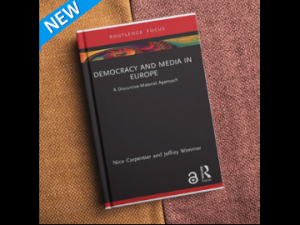
New book “Democracy and Media in Europe – A Discursive-Material Approach” by Nico Carpentier and Jeffrey Wimmer