Open, thoughtful and politically active community, based on the principle of equality.
(Peace Institute vision)
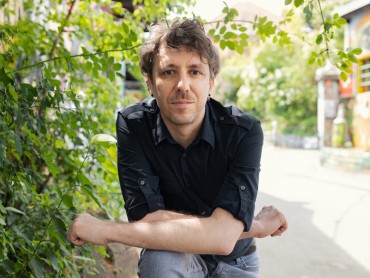
Iztok Šori
Iztok Šori is a sociologist, researcher and Director of the Peace Institute in Ljubljana. He received his PhD in Sociology from the Faculty of Arts, University of Ljubljana, in 2012, having previously graduated in Ethnology and Cultural Anthropology and Sociology from the same faculty. He has been a researcher at the Peace Institute since 2011 and its Director since 2018.
His research examines social inequalities, power relations, and processes of inclusion and exclusion. His work spans sex work and care work, political and media populism, exclusionary discourses, and private and intimate life. He has participated in numerous national and international research projects, including as Principal Investigator of the research project Occupational Risks in Sex Work at the Intersections of Policy Framework and Social Stigma (ORIS). As part of this project, the research team conducted the first comprehensive empirical study of occupational risks in sex work in Slovenia and developed an information platform for sex workers.
He is the author of the scholarly monograph Samskost: med ideologijo družine in ideologijo izbire (Singleness: Between the Ideology of Family and the Ideology of Choice, 2015) and co-editor of Transformations of Labour through the Lens of Sex Work (Routledge, 2026). He serves on the Council of the Social Science Data Archives and the editorial board of the academic journal Družboslovne razprave (Social Science Forum), and participates in national and European research and civil society networks.
Under his leadership, the Peace Institute initially experienced substantial growth in its research activities, staff and funding, followed by a period of consolidation in response to increasingly challenging funding conditions. His work focuses on strengthening scientific excellence and societal impact, supporting staff development, and safeguarding the Institute’s long-term stability and independence.
Key achievements during his directorship include establishing systematic planning and monitoring of stable institutional funding from the Slovenian Research and Innovation Agency (ARIS), introducing measures to support staff career development, strengthening methodological support for research, and developing an internal quality assurance system, including the establishment of a Research Ethics Committee.
In 2026, working with colleagues, he developed the Peace Institute’s new Programme Strategy for 2027–2031 and laid the groundwork for its organisational restructuring. A central objective of these changes is to bring the Institute’s research activities together under three long-term programmes — Democratic Public Sphere, Social Justice, and Global Solidarity — while strengthening the conditions for their implementation. His approach to leadership emphasises a collaborative organisational culture, research autonomy, and the connection between academic research and wider societal engagement.