
The book Transformations of Work Through the Lens of Sexual Work has been published
5. 3. 2026 | Gender
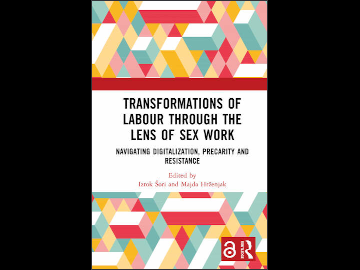
 A scientific monograph titled Transformations of Labour through the Lens of Sex Work: Navigating Digitalization, Precarity and Resistance) has been published by Routledge. The book examines transformations of labour in late capitalism through the lens of sex work.
The monograph (edited by Iztok Šori and Majda Hrženjak) brings together case studies from countries of the Global North and situates sex work within the frameworks of neoliberal governance, digitalization, platformization, and the gig economy. It highlights the contradictions of contemporary labour regimes: autonomy is often intertwined with precarity, visibility with surveillance, and agency with algorithmic management.
The book emphasizes that sex work is not an exception or a marginal topic, but an important analytical starting point for understanding broader transformations of labour. Sex work reveals how contemporary economies increasingly rely on forms of labour that combine bodily, emotional, and digitally mediated work, and how value creation increasingly takes place under conditions of flexibilization, informality, and platform-based control.
A particularly important emphasis of the book is that resistance and collective organizing often emerge not outside the system but within it: workers simultaneously adapt to the logics of platform capitalism (e.g., self-promotion, entrepreneurial flexibility, monetization of visibility) while also developing forms of community support, organizing, and resistance that connect with broader movements for social justice.
The authors confirm that sex work is work and that legal recognition and the protection of sex workers’ rights are necessary. At the same time, they stress that formal recognition alone is not sufficient to improve working conditions: broader systems of exclusion and inequality that shape sex work—and, more broadly, contemporary labour markets—must also be addressed.
The volume also includes a chapter by Iztok Šori and Leja Markelj titled Ambivalences of Precarity: Sex Workers’ Assessments of Quality of Work in Slovenia’s Sex Industry. The chapter shows that precarity in sex work is not uniformly negative: it can entail greater autonomy while simultaneously increasing vulnerability. Among the most important factors reducing the quality of working conditions is stigma.
The monograph is relevant for researchers and advanced readers working on issues of labour, sexuality, and political economy, as well as for policymakers and activists in the fields of labour rights and social justice.
Bibliographic information
Transformations of Labour through the Lens of Sex Work: Navigating Digitalization, Precarity and Resistance
Editors: Iztok Šori, Majda Hrženjak
Publisher: Routledge (Taylor & Francis)
DOI (e-book): 10.4324/9781003640837
Related Articles
-

Symposium of the Research Program Group: Work, Law, and Methods in Times of Social and Technological Change
-

Affective Sex Work in a Post-Socialist Context
-

Sex work online: professionalism between affordances and constraints
-

Workers’ Struggles in Post-Socialist Slovenia: Between Trade Union Strategies and Worker Stratification in the Workplace