
The Importance of Clear Communication of Procedural Rights for Suspects and Accused Persons
12. 6. 2026 | Human Rights and Minorities
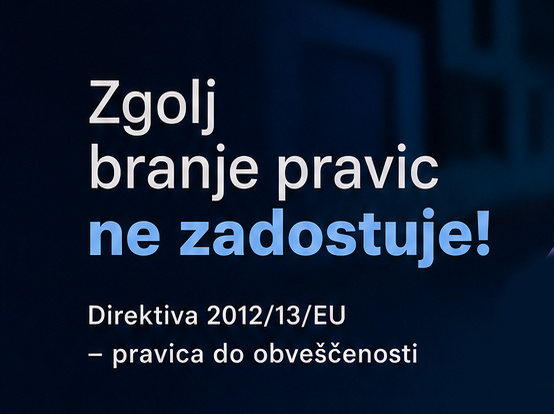
Helping suspects and accused persons understand their procedural rights remains one of the key challenges in criminal proceedings, particularly at the early stages. This is the focus of an animated video that demonstrates why procedural rights should be communicated clearly, accessibly and in a manner that takes into account the individual circumstances and specific situation of the person concerned. Only then can they be fully understood and effectively exercised.
Formally informing suspects and acused persons of their rights does not necessarily mean that those rights are truly understood or can be exercised effectively in practice. The way procedural rights are communicated has a direct impact on the fairness of proceedings and on whether suspects and accused persons are able to effectively exercise the procedural safeguards available to them.
“Failure in the proper communication of rights to suspects and accused, especially in the early stages of proceedings, may create substantial problems for all those involved,” notes João Gomes, FULL-PROOF Project Coordinator at IPS Innovative Prison Systems.
The publication of this video animation marks the beginning of a wider awareness-raising campaign carried out as part of the FULL-PROOF project. In the coming months, additional animations and infographics will be published to highlight the importance of procedural rights and their practical application.
Video is produced as part of the FULL-PROOF project – Ensuring the due course of criminal proceedings by strengthening respect for the procedural rights of suspects and the accused. The project contributes to improving criminal proceedings by addressing violations of procedural rights that occur during the early stages of the criminal process, with a particular focus on the right to information, the right of access to a lawyer and the right to legal aid, as established by Directives 2012/13/EU, 2013/48/EU and 2016/1919/EU.
Related Articles
-

From legal standards to practice: FULL-PROOF guidance booklets
-
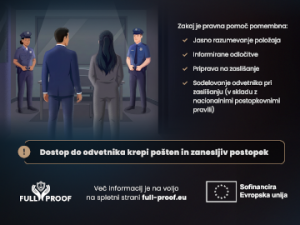
Timely and effective access to a lawyer and confidential communication
-

International Cross-Professional Seminar in Poznan: From Legal Standards to the Effective Implementation of Procedural Rights in Practice
-

Education on the procedural rights of suspects and accused persons