
Veronika Bajt published new article on securitized return policy in Slovenia
13. 8. 2026 | Human Rights and Minorities
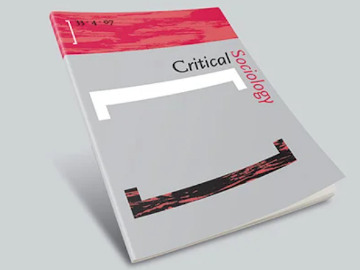
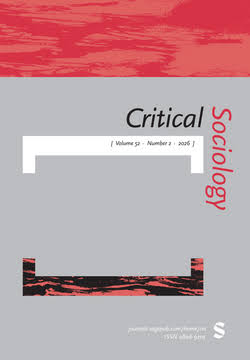 Veronika Bajt, a researcher at the Peace Institute, has published the academic article “Return at the Margins of Europe: Securitized Migration Governance in Slovenia” in the scholarly journal Critical Sociology.
The article examines return and readmission policy in Slovenia within the framework of the European Union’s (EU) migration governance regime, analysing how migration control is shaped by existing regulations, institutional practices and political interests.
Although Slovenian migration policy is presented at the declarative level as seeking a balance between enforcing legislation and protecting human rights, the analysis shows that it is largely oriented towards controlling, deterring and removing “undocumented” migrants. At the normative level, Slovenia prioritises “voluntary” return, but faces numerous logistical and diplomatic obstacles when returning third-country nationals.
The analysis also reveals a gap between the provisions of the EU Return Directive, the national legal framework and practices on the ground. Despite its limited effectiveness, forced return remains the predominant mode of implementing the Directive, while support systems for voluntary return remain relatively underdeveloped.
The analysis of Slovenia contributes to critical debates on migration governance in the European Union. It shows how smaller EU member states shape and implement migration policies under conditions of political pressure and structural constraints. The article’s central argument is that, despite formal commitments to human rights protection and the principle of voluntariness, Slovenian return policy is primarily shaped by securitization, bureaucratic inertia, geopolitical positioning, and nationalist and anti-migration pressures. The result is a persistent tension between policy and enforcement priorities on the one hand and rights-based commitments on the other.
The article draws on a critical analysis of policy and strategic documents, legal frameworks and political discourse, as well as interviews with key stakeholders.
The article is already available online ahead of its publication in print.
Related Articles
-
On the Digitalisation of European Borders and Migration Struggles
-
How Do Citizens Understand Media Autonomy and Its Role in Democracy?
-
The mobility of care work between Slovenia and Bosnia and Herzegovina
-
Who Owns Slovenian Media? New Study Examines Intensifying Media Ownership Concentration in the Attention Economy