Cultural Racism, Gendered Othering, and Hate Speech: Discourses, Imaginaries, and Everyday Borders in Slovenia
6. 2. 2026 | Politics

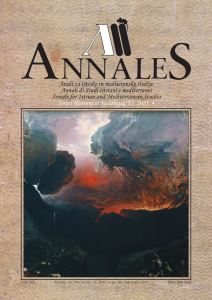
Ana Frank’s article Cultural Racism, Gendered Othering, and Hate Speech: Discourses, Imaginaries, and Everyday Borders in Slovenia, published in the thematic section on hate speech in the latest issue of the journal Annales, extends the framework into the symbolic and affective realm of identity. Drawing on postcolonial theory, psychoanalysis, and intersectional feminism, she introduces the notion of “the imaginary” as a network of images and myths that define belonging. Hate speech functions as a disciplinary mechanism within this imaginary, often implicit and non-verbal, emerging through visibility and everyday cues. Frank’s key empirical findings are based on interviews and focus groups with migrants, Muslims, Roma, and gender minorities in Slovenia, revealing how markers like the headscarf are tolerated for Christian women but vilified for Muslim women. Frank situates this within cultural or neo-racism, where exclusion is justified by lifestyle and civilizational difference rather than biology, intertwined with gendered and religious Othering. Her core argument is that hate speech restores normative order when imaginaries are challenged, operating through silence, glances, and institutional practices. Effective counter-narratives must hence confront not just individual expression of speech, but these systemic imaginaries.