Civic space between formal rules and reality
Civic space between formal rules and reality
11. 5. 2026 | Politics
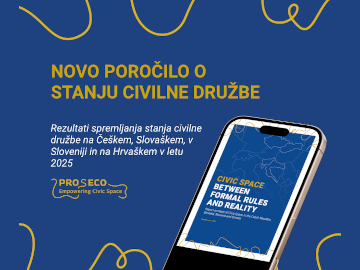
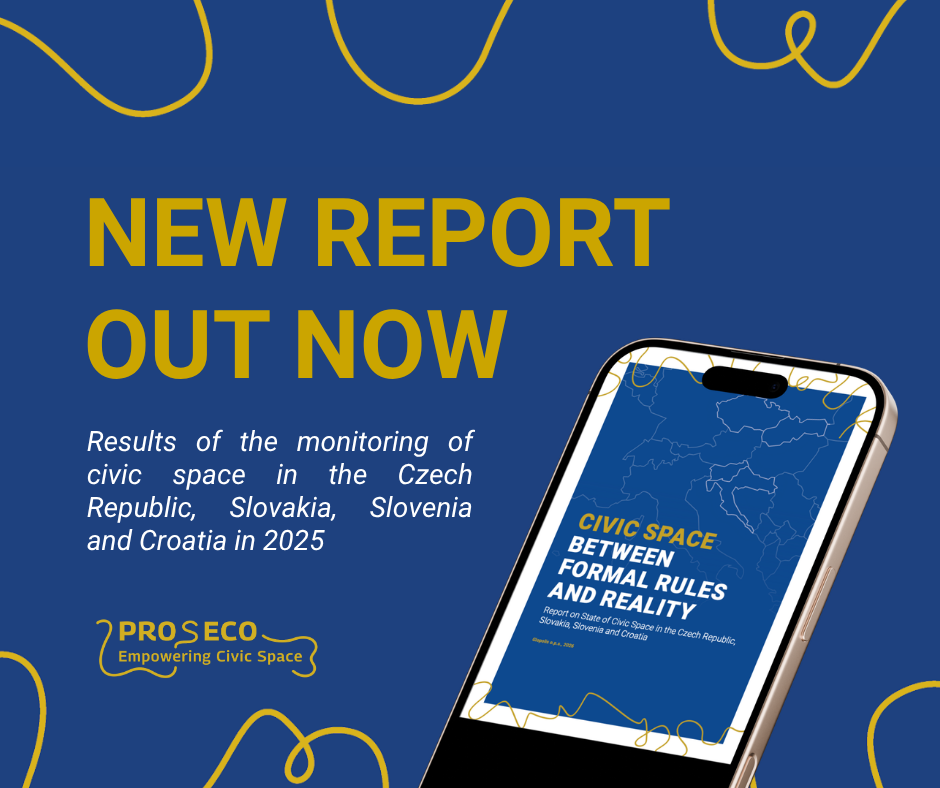
The newly released report Civic Space Between Formal Rules and Reality provides a comprehensive analysis of the civil society environment in four European countries: Czechia, Slovakia, Slovenia, and Croatia. The findings track developments throughout 2025 and the first months of 2026.
The report identifies a trend where restrictions on civic space emerge not through direct bans, but through a combination of administrative, financial, and rhetorical pressures.
What’s inside the report?
- 2025 civic space monitoring with 2026 updates: a systematic review of the 2025 monitoring period, supplemented by key 2026 updates that capture a turning point in government relations with civil society, mainly in Czechia.
- Regional comparison: a detailed scorecard of four countries (CZ, SK, SI, HR) revealing the gaps between formal rules and the everyday reality of civil society.
- Identification of trends: Analysis of emerging pressures, such as the bypassing of standard legislative procedures, hostile rhetoric, and restricted participation in decision-making.
- Policy recommendations: A set of systemic recommendations for national governments and EU institutions to ensure stable funding, reduce administrative burden, and involve civil society in decision-making.
Why read it?
- Mechanisms of civic space erosion: the report documents the specific tactics used to delegitimize independent actors, focusing on administrative and rhetorical pressure preceding legislative changes.
- Alignment with EU strategy: the findings directly reflect the priorities of the new EU Strategy for Civil Society, providing evidence-based data for the upcoming European debate on the protection of the rule of law and democratic participation.
- Cross-border pattern recognition: by comparing four different political contexts (CZ, SK, SI, HR), the report identifies shared patterns of administrative and political pressure, allowing for a better understanding of regional trends in the CEE area.
Read the full report here.
More detailed findings for Slovenia are compiled in a separate national report, available here.