
Empowering Migrant Voices in Local Integration and Inclusion Processes: Good Practices for Integration at the Local Level in the Cities of Zagreb and Čakovec
27. 11. 2024 | Human Rights and Minorities

Between November 11 and 14, the second meeting of the international consortium for the project “Empowering Migrant Voices in Local Integration and Inclusion Processes” took place in Čakovec and Zagreb. In Slovenia, this project is implemented by the Peace Institute, the Gmajna Cultural Association, the City of Ljubljana, and the Association of Municipalities of Slovenia.
In Čakovec, we visited the headquarters of the Međimurje Region, where we were welcomed by its head, Matija Posavec, and learned about the work of their integration department. We also visited the “Platforma” Community Center and the PrInOS Center—both of which focus on the empowerment and reception of migrants and other marginalized groups—as well as the public “Open University Čakovec,” which offers Croatian language instruction for foreigners. The “Kalinka” Russian-speaking association presented a cultural program for us.
In Zagreb, we visited the “One Stop Shop,” a new multifunctional space for providing information to migrants, which was recently opened in the city center. We also met with Jana Radić, a representative from the City of Zagreb’s integration department, who outlined plans for developing a city-level integration action plan. Salam Al-Nidawi explained the work of the city’s Coordination Body for Integration—which includes migrants themselves—while Mirela Travar presented plans for the establishment of an Intercultural Social Center.
Additionally, we visited the “Women to Women” collective at the “Živi atelje DK” gallery. At the Ribnjak Youth Center, we were introduced to a large number of minority and migrant associations that operate there, as the center provides them with space, infrastructure, and public support.
It has once again become clear that the extent and manner of migrant integration into the local environment depend on the willingness of the city administration, and that local-level action is of great importance. It appears that the City of Zagreb has taken some significant steps, and we hope that Ljubljana will follow the same path.


Related Articles
-
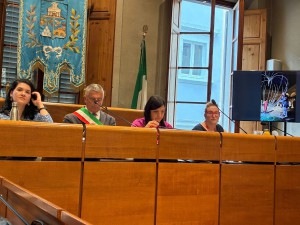
Sixth Meeting of the EMV-LII International Project Consortium in Empoli
-
Who Cares for Older People? The Transnationalization of Care Work in Central and Eastern Europe
-
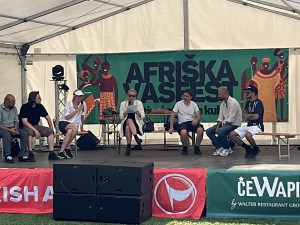
Integration in Slovenia – Key Findings Presented at the 10th African Village Festival
-
The mobility of care work between Slovenia and Bosnia and Herzegovina