Hate Speech: Conceptual Intersections and Counter-Narratives
20. 1. 2026 | Politics

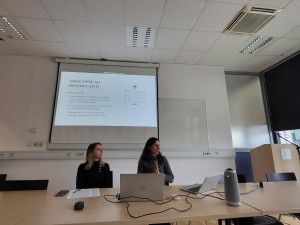
 In July 2024, an interdisciplinary academic symposium about hate speech took place in Ljubljana. This international professional exchange was the foundation for the articles appearing in this special issue of Annales; ultimately, these articles together argue that a synthesis of knowledge scattered throughout different disciplines is the way forward if we wish to understand this complex phenomenon.
The special issue, edited by Veronika Bajt, opens up a space for discussions that address the contemporary challenge of polarization of societies and contribute to a clearer conceptualization of hate speech. The contributions come from various disciplines (sociology, political science, anthropology, linguistics, law) and focus on country cases outside of the usual “Western gaze”: Croatia, Slovenia, Serbia, and Turkey. The special issue thus advances a regional perspective that challenges the dominance of Western-centric hate speech scholarship. In contrast to what is often pervasive in legal analyses’ focus on individual rights and freedom of expression, these contributions emphasize collective processes: the sedimentation of prejudice into institutions, the entanglement of discrimination with governance, and the circulation of destructive messages across media and everyday life. Rather than treating it as a narrow legal category or a problem of a linguistic nature, the issue thus traces how hate speech participates in the maintenance of hierarchies: how words and silences, gestures and policies, all converge in the practices of inclusion and exclusion that shape modern societies. Across its diverse case studies, the issue’s authors share an intellectual commitment to understanding hate speech as a system of governance and social reproduction of difference, not an anomaly of aggression. In this sense, hate speech is not simply what offends, it is what defines the boundaries of belonging.
A shared conceptual argument is that hate speech must be understood beyond merely “illegal expression.” It is not only a verbal, written or otherwise disseminated aggression but a systemic, performative, and relational phenomenon that sustains hierarchies of “race,” class, gender, nation, and other conceptions of group belonging. The special issue explicitly links hate speech to Othering as a social mechanism and as a social act with effects, a tool of governance, a mirror of inequality.
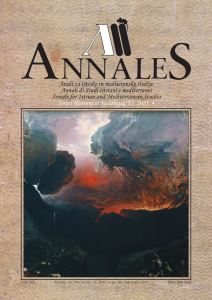
ANNALES, SERIES HISTORIA ET SOCIOLOGIA 35, 2025, 4
Individual articles:
Veronika Bajt:
Hate Speech: Conceptual Intersections and Counter-Narratives
Veronika Bajt:
The Sociology of Hate Speech
Marta Stojić Mitrović:
Hate Speech and Hate by Design: Anti-Migrant Discourse in Serbia
Katarina Damčević:
“Ready for the Homeland”: The Semiotics of Hate Speech and Memory in Post-Conflict Croatia
Melike Akkaraca Kose:
Ethnic Terms in Turkish: Between Neutrality and Offense
Zoran Fijavž:
Digital Discourse Dilemmas: Moderating Slovenian Digital Landscapes
Neža Kogovšek Šalamon & Sergeja Hrvatič:
Prosecutorial Practice on Hate Speech in Slovenia: Context, Trends, and Issues