
Advocacy for Roma rights: shared challenges and opportunities for cooperation
26. 11. 2026 | Human Rights and Minorities
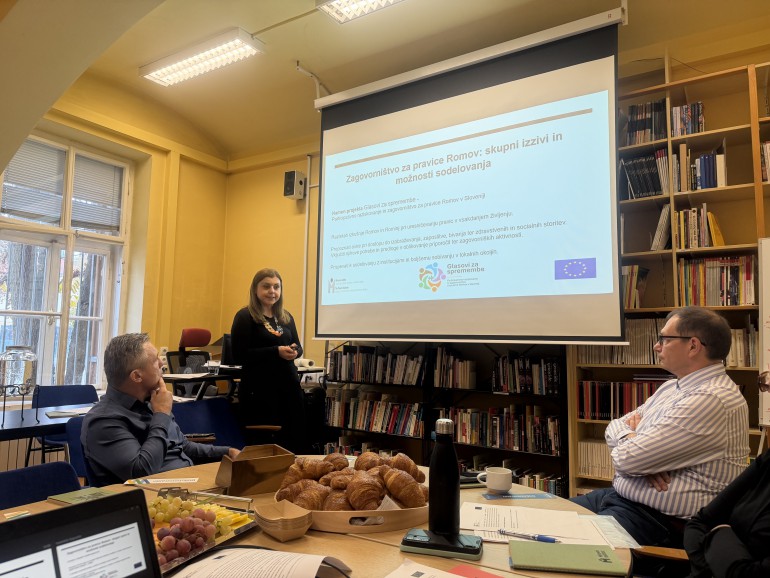
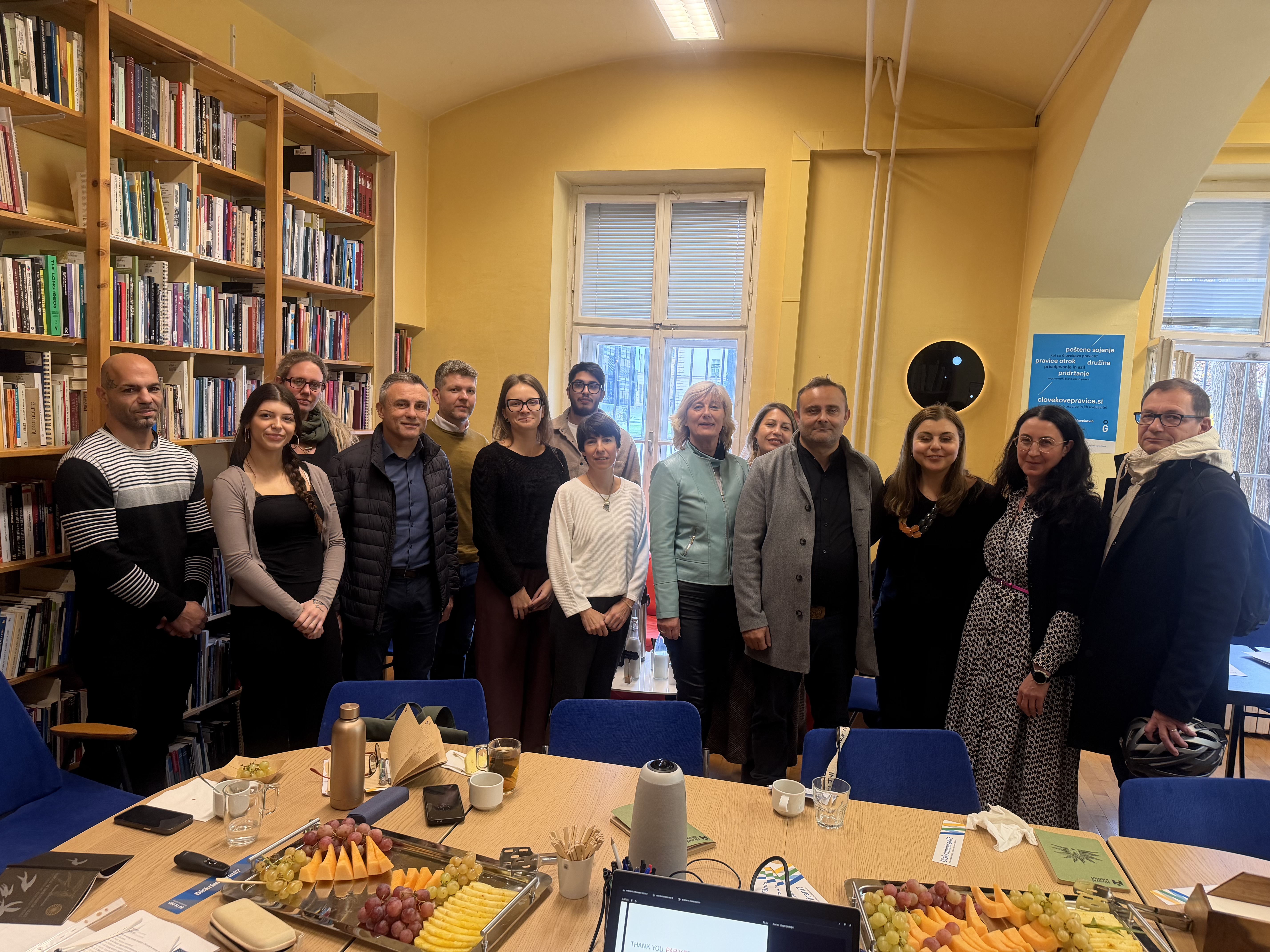
How can we overcome longstanding systemic barriers to the realisation of Roma rights? How can we bring together the efforts of Roma communities, civil society organisations and relevant institutions and translate them into concrete and lasting change? These were the central questions of the roundtable held at the Peace Institute on 18 November 2026, bringing together representatives of the Roma community, civil society and institutions.
The roundtable was organised to mark the conclusion of the project Voices to Action: Participatory research and advocacy for Roma rights in Slovenia, with a focus on exchanging experiences and exploring opportunities for joint advocacy, combating discrimination and exclusion, and improving coexistence in local communities.
In the introductory session, Katerina Kočkovska Šetinc presented the key findings of the field research, which involved eight semi-structured interviews with members of the Roma community and ten consultations. The findings reveal significant disparities between local contexts and numerous barriers to accessing education, employment, adequate housing, healthcare and social services. The experiences shared by interviewees also highlight the importance of institutional responsiveness, access to legal counselling and the active participation of Roma women and men in decision-making processes.
Tjaša Turnšek presented the participatory approach, process and outcomes of the facilitated citizens’ dialogue between the majority and Roma communities in south-eastern Slovenia, held in Metlika in October, during which participants developed a joint call outlining concrete recommendations and measures for improving coexistence.
In the following session, speakers from various organisations and institutions shared their experiences, challenges and advocacy approaches.
Nataša Posel (Amnesty International Slovenia) drew attention to the longstanding failure to ensure the fundamental human rights of the Roma community in Slovenia, particularly the right to adequate housing and access to drinking water. She emphasised the responsibility of the state and local authorities in guaranteeing these rights.
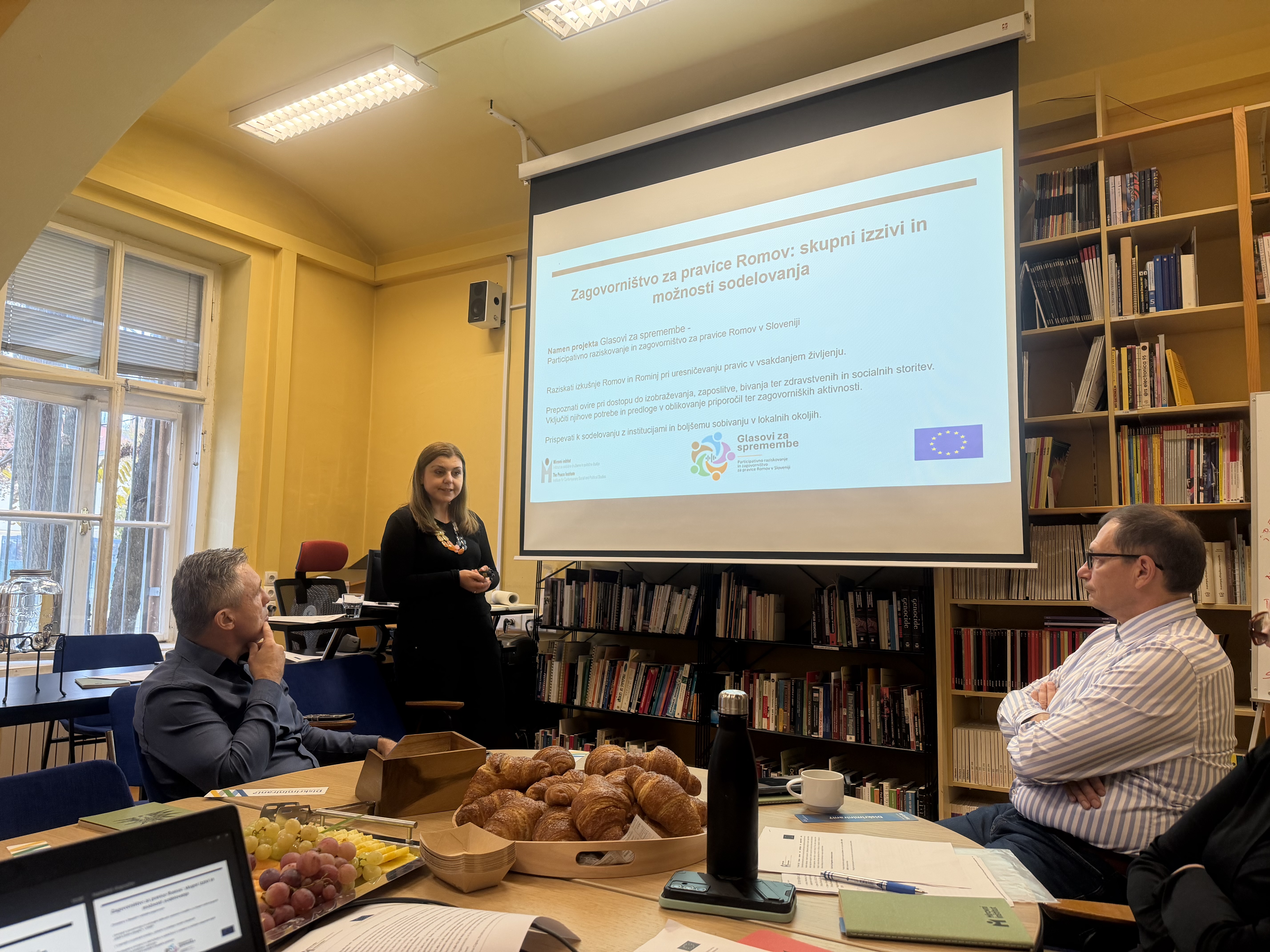
Nevenka Prešlenkova (Advocate of the Principle of Equality) presented the available mechanisms for institutional protection against discrimination, highlighted the problem of underreporting discrimination and outlined opportunities for cooperation in addressing systemic discrimination and providing free legal counselling.
Zvonko Golobič (Association for the Development of the Roma Community) raised questions concerning municipal accountability, the effective use of public funds allocated to improving the situation of the Roma community, and the importance of active and responsible engagement by Roma municipal councillors.
Sandi Horvat (Roma Academic Club) discussed stereotypical representations of Roma, the role of the media in reinforcing them and the importance of responsible public communication. He also highlighted the need to move beyond treating the Roma community primarily through project-based interventions and to actively involve Roma in developing solutions.
Liljana Tudija (Association for the Development of the Roma Community) focused on Roma women’s health, experiences of unequal treatment in healthcare institutions, and the importance of preventive measures, health literacy and raising awareness of reproductive health.
Anja Tekavčič (Logatec Centre for Social Work) presented the role of social work in advocating for Roma rights, warned against the criminalisation of poverty and social exclusion, and emphasised the importance of strengthening support services and direct community-based work.
Kevin Tudija (Centre for School and Outdoor Education) shared his personal experiences of discrimination when seeking employment and spoke about his daily work with Roma children in Metlika. He highlighted the importance of a supportive environment, cooperation with parents, educational support and providing young people with genuine opportunities for their future.
Jadranka Glavač and Roman Hudorovac (Kočevje Adult Education Centre) presented their experiences of working with and advocating for the Roma community in Kočevje. Their contribution focused on the implementation of existing legislation, improving housing conditions and opportunities for Roma labour market inclusion, including through social entrepreneurship.
Tina Cigler (Association for Developing Voluntary Work Novo Mesto) presented the impact of many years of direct work in Roma settlements. She highlighted encouraging outcomes in children’s participation in education, continuation of schooling, employment and the active inclusion of young people in wider society.
The contributions and discussion highlighted the need for closer and better-coordinated cooperation between the Roma community, civil society organisations and relevant institutions, more consistent implementation of existing legislation, and long-term support for programmes that deliver tangible results on the ground.
Related Articles
-

More Than Just an Identity Document: Children’s Rights Do Not Follow Project Timelines
-
Improving coexistence does not happen on its own: it requires the active and coordinated involvement of everyone, and above all, nothing about Roma without Roma.
-
New report on civic space resilience: good practices from Slovenia, Croatia, Slovakia and the Czech Republic
-
Training for Local Government Staff: Good Practices from Zagreb and Međimurje