
Improving coexistence does not happen on its own: it requires the active and coordinated involvement of everyone, and above all, nothing about Roma without Roma.
26. 10. 2026 | Human Rights and Minorities
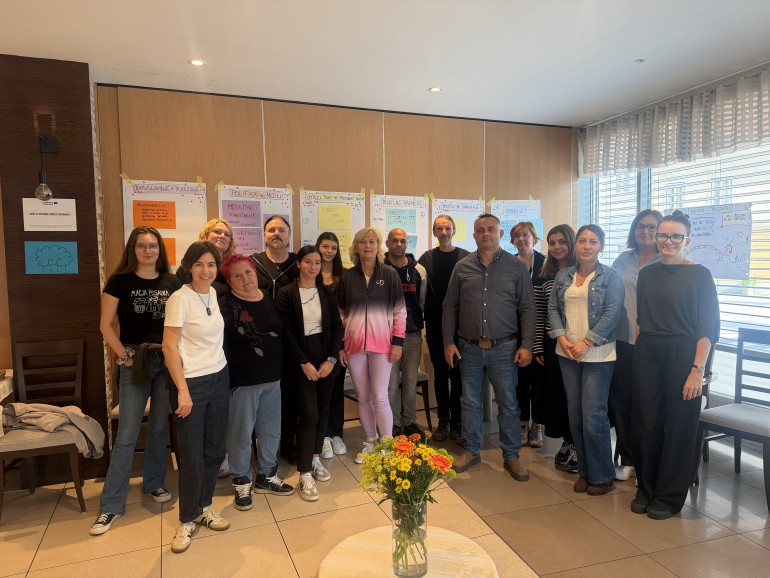
Last weekend, residents from both the majority and Roma communities gathered in Metlika for a three-day meeting to discuss living together in southeastern Slovenia: where problems arise, what concerns them, what needs to change, and what they can do together. They concluded that solutions exist, but they require a much more inclusive and coordinated approach than the one taken so far, and, above all, a genuine commitment to change.
Relations in southeastern Slovenia are fragile, marked by considerable mistrust and negative experiences. However, three days of in-depth and open discussion around the same table showed that solutions are possible, but they require a different, much more inclusive and coordinated cross-sectoral approach. The carefully prepared and facilitated discussion was organised by the Association for Developing Voluntary Work Novo mesto and the Peace Institute, drawing on the model of deliberative processes used in the European Union to enable citizens to jointly reflect on matters of public interest (so-called citizens’ assemblies). Fourteen participants took part, seven from each community. They represented different age groups and professions and came from across the region, from Novo mesto, Črnomelj and Kočevje to Trebnje and Metlika.
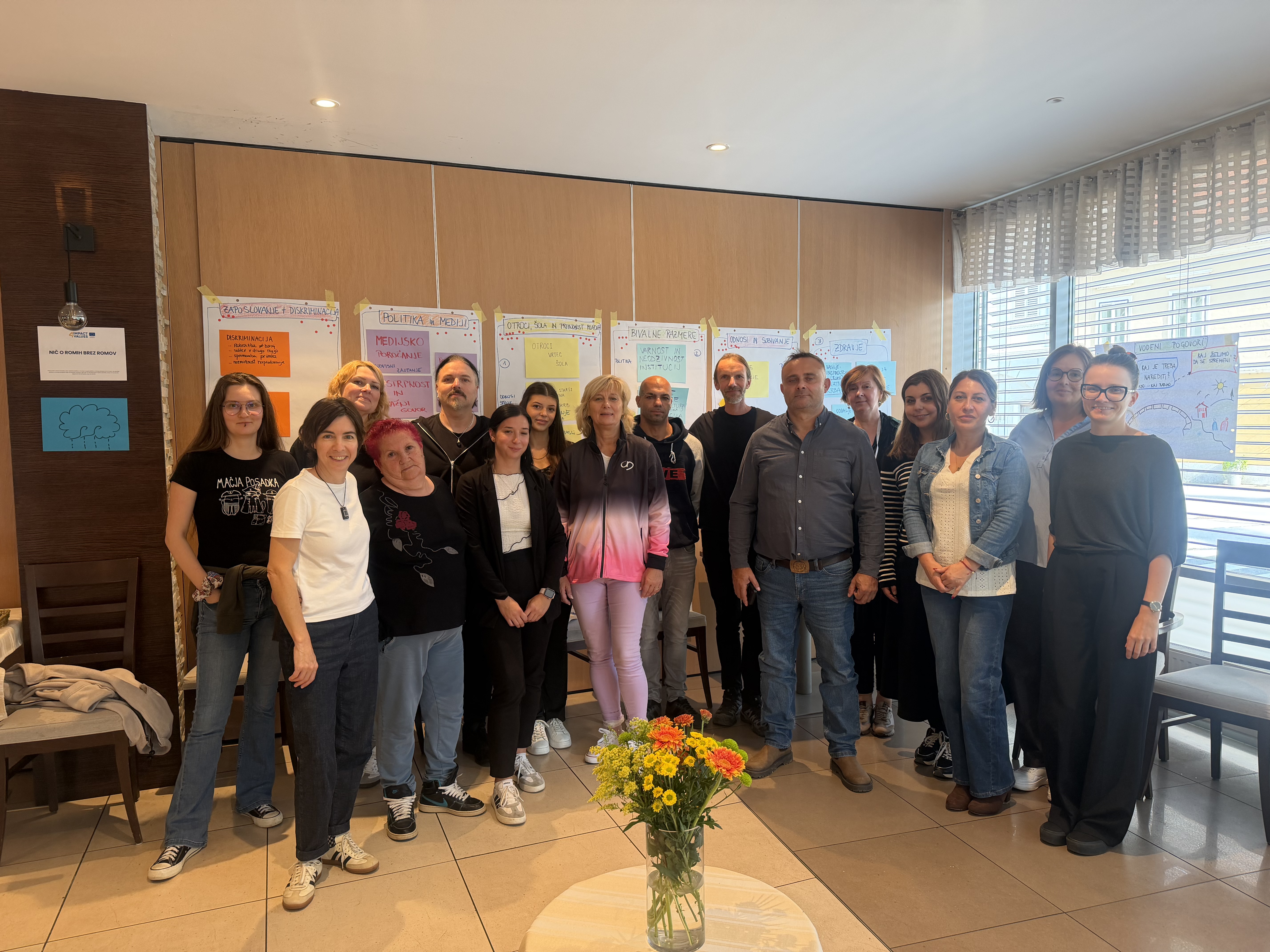
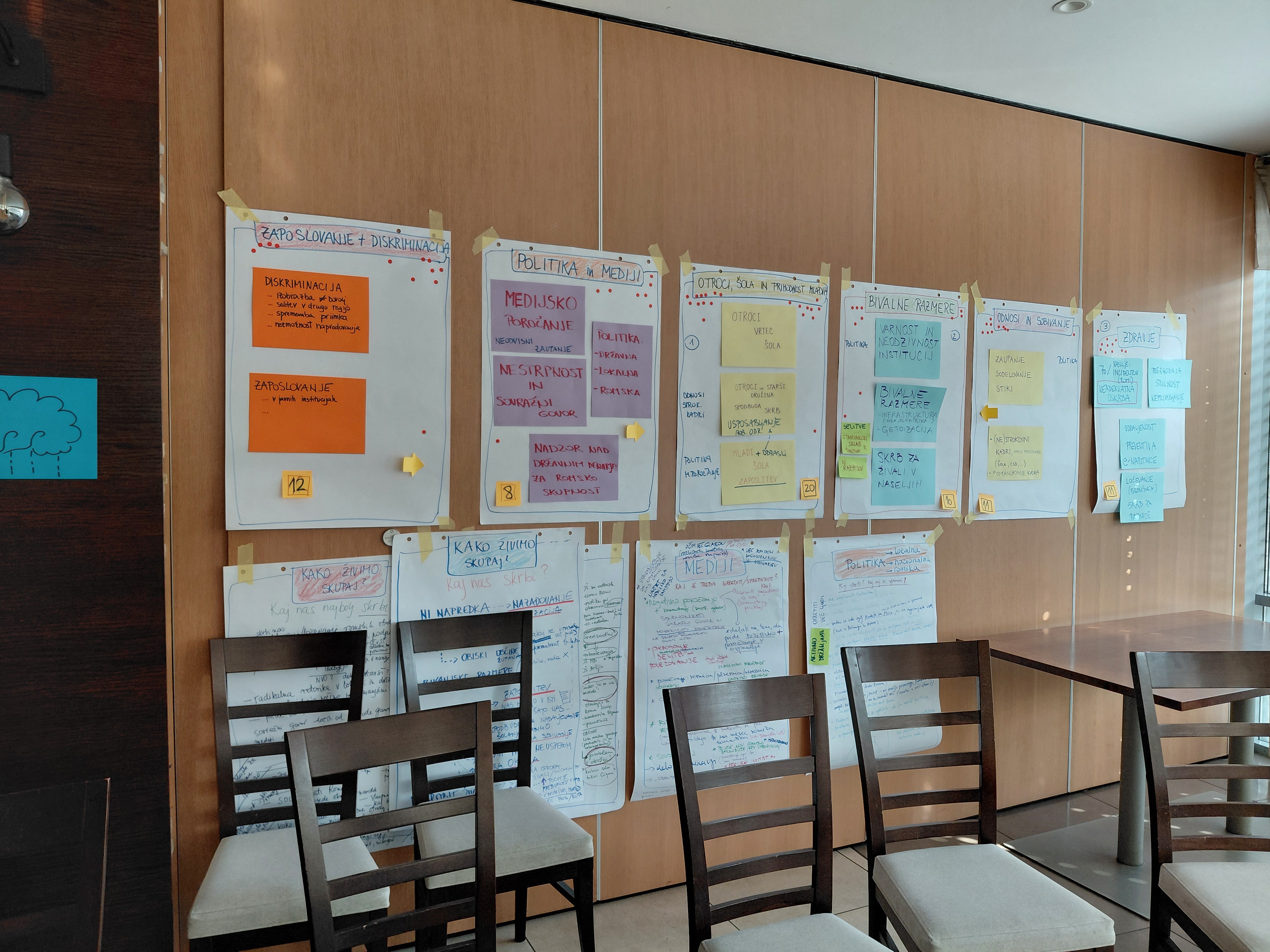
Over the three days, participants developed more than 25 joint calls for action and over 80 concrete proposals and measures to improve life in southeastern Slovenia, focusing primarily on the areas they identified as most important: education, health and housing conditions.
The proposed joint measures include tackling discrimination, improving access to water and electricity and providing adequate housing solutions, making healthcare and preventive services more accessible, and offering greater support to children, young people and families, among other things.
The key message is that problems in different areas cannot be addressed in isolation. Coordinated, long-term and measurable action by all relevant institutions is needed, and the people directly affected must be involved in both designing and implementing these measures. One of the key measures identified was greater Roma participation in local and national decision-making processes.
Participants also called for greater oversight of how state funds allocated to municipalities to improve the situation of Roma communities are spent. They stressed that Roma community representatives must be involved in planning, implementing and monitoring measures financed through these funds. Among practical local concerns, they also highlighted the need for more effective solutions to the problem of neglected and stray animals in Roma settlements.
“The aim of the meeting was not to reach consensus on every issue, but to demonstrate that dialogue is possible even among people with very different experiences, and that they can identify shared interests and develop practical recommendations,” said Brankica Petković, MA, a researcher at the Peace Institute, following the meeting.
Zvonko Golobič, a representative of the Črnomelj-based Association for the Development of the Roma Community, added: “This was the first time I had taken part in an event of this kind, where representatives of the Roma and majority communities were on equal footing and everyone had the opportunity to express their views and discuss possible solutions. Neither side is satisfied with the current situation. It is only right that we look for solutions together.”
“We do a lot of work with Roma people in Kočevje, but this time we brought together individuals from all across the region. We presented our social activation programme, the first pilot programme, Romski Zour, aimed at promoting access to employment, as well as the development of a business model with social enterprise status. Without closer and more systematic cross-sectoral cooperation, however, there can be no tangible progress. We have been going around in circles for far too long. It is time to try a different approach,” said Jadranka Glavač from the Kočevje Adult Education Centre.
“That is true. We are constantly looking for new approaches. Before the meeting in Metlika, we also spoke with a range of other stakeholders, including representatives of the Šentjernej People’s Initiative. We know that we can only make things better by working together,” concluded Tina Cigler, project coordinator at the Association for Developing Voluntary Work Novo mesto.
The work does not end here. In the coming months, the joint calls for action will be presented to municipalities, national authorities, the media and other decision-makers. According to Cigler, the first opportunity to do so will be at the School for Mayors event on Tuesday, 20 October 2026, where mayoral candidates will discuss proposals to improve Roma employment in particular.
Participants in the Metlika meeting also established working groups covering four main thematic areas. The groups will meet regularly in the future and work with institutions to promote concrete steps towards implementing the proposed measures.
Related Articles
-
Empowering Migrant Voices in Local Integration and Inclusion: Good Practices of Local-Level Integration in Heraklion, Crete
-
Researchers from the Peace Institute on the Citizens’ Parliament as an Innovative Democratic and Research Method
-

Political Participation for All – Towards a Europe of Equals
-

The Peace Festival brought people together to envision a future beyond militarisation