
The gap between normative protection and structural constraints on the democratic role of media in Slovenia
26. 2. 2026 | Media
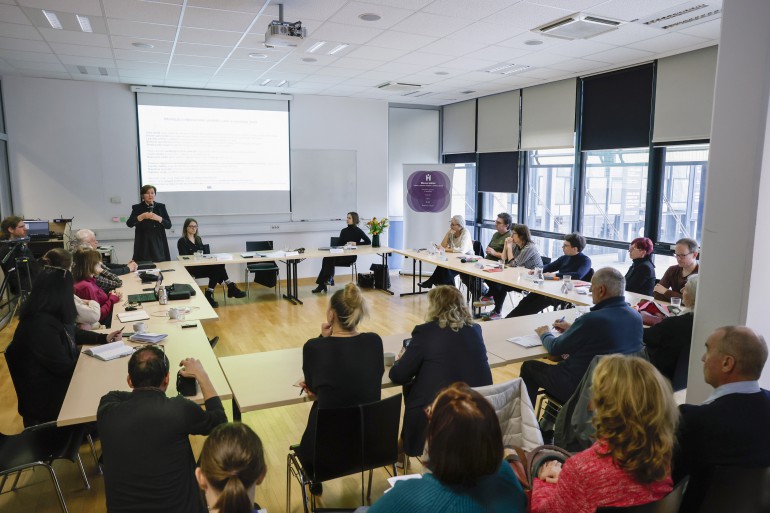
At the conclusion of the European scientific research project Mapping Media for Future Democracies (MeDeMAP), the Mirovni inštitut organized a roundtable discussion on February 24 titled The Future of Media and Democracy in Slovenia. The purpose of the event was to engage journalists, representatives of ministries and media organizations, as well as citizens, in a discussion on how to ensure a democratic, independent, effective, and publicly accountable media environment.
Brankica Petković, the project coordinator in Slovenia, opened the event by summarizing the key research findings, which reveal a high level of normative and recently updated legal protection of the media in Slovenia. Nevertheless, the democratic role of the media is hindered by fragmentation and limited institutional capacity to oversee the implementation of legislation, weak transparency, ineffective limitations on media concentration, insufficient funding under political influence, inadequate protection of journalists, and limited opportunities for institutional public participation.
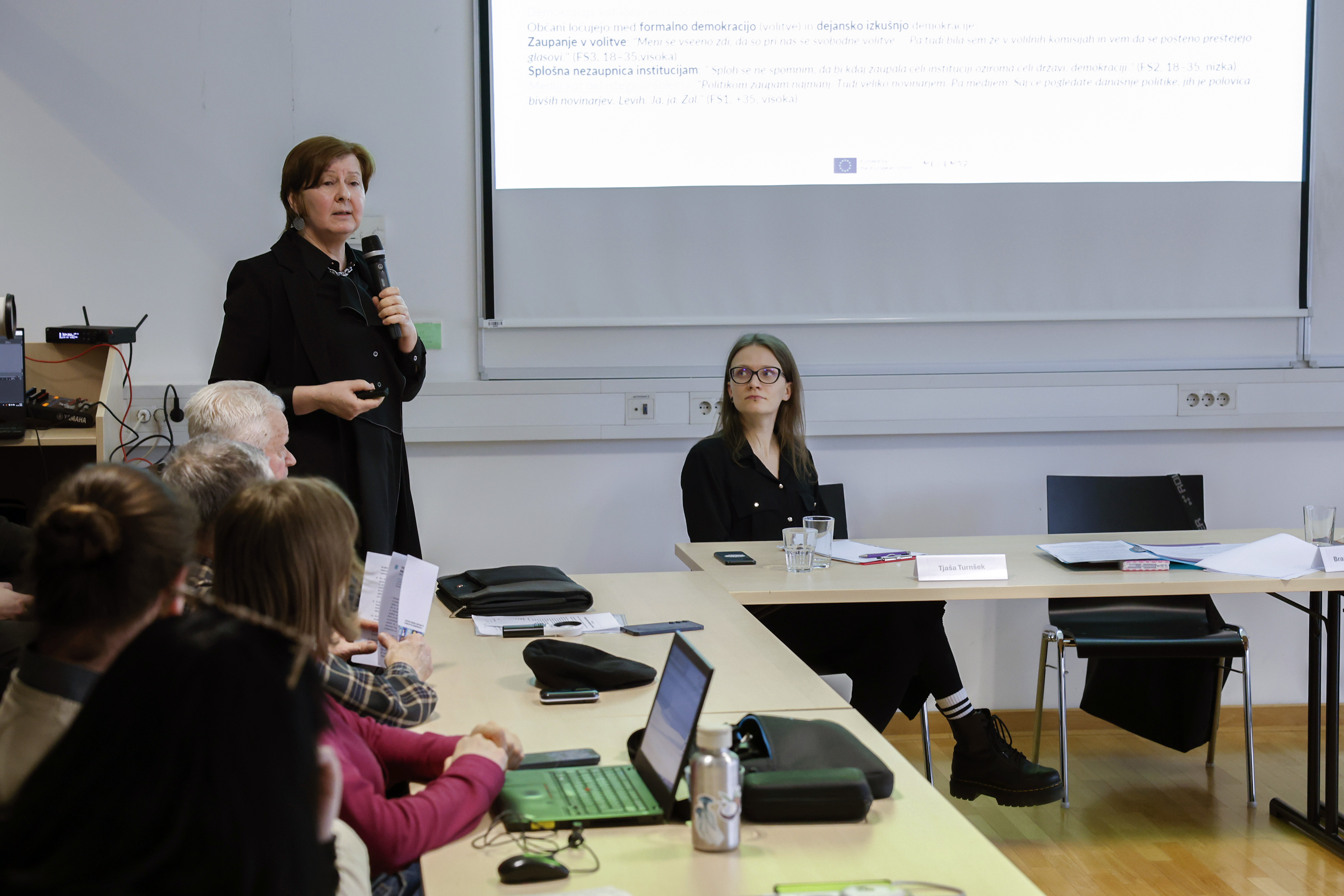
Photo: Borut Krajnc
As the project also included interviews with journalists, researcher Tjaša Turnšek highlighted findings indicating journalists’ commitment to professional ethics and their view of the media as a space for debate, oversight of power, and participation. A degree of skepticism toward this position was expressed by citizens in focus groups, who stated that media autonomy—and consequently journalists’ autonomy—is systemically constrained by advertising pressures, ownership structures, and precarious labor conditions. Despite this skepticism, they value professional and objective journalists and express a desire for accessible, understandable, and inclusive media.
The project’s final phase was presented by Lori Šramel Čebular and focused on identifying concrete solutions and proposals through the organization of citizens’ assemblies as a participatory action research method. At the assembly, citizens called, among other things, for a unified regulator, the promotion of worker ownership, and transparent media financing.
The roundtable created space for an exchange of views among numerous representatives from different professions, fields, and communities. Following the introductory presentation, the discussion featured Ksenija Horvat, Director of Television Slovenia; Sandra B. Hrvatin, Professor at the Faculty of Humanities of the University of Primorska; Petra Lesjak Tušek, journalist and regional editor at Večer; Špela Stare, Secretary General of the Slovenian Journalists’ Association; Gal Krizmanič, journalist at Radio Študent and Dnevnik; Mirsad Begić, participant in the citizens’ assembly on media and democracy; and Lenart J. Kučić, advisor to the Minister of Culture on media policy.
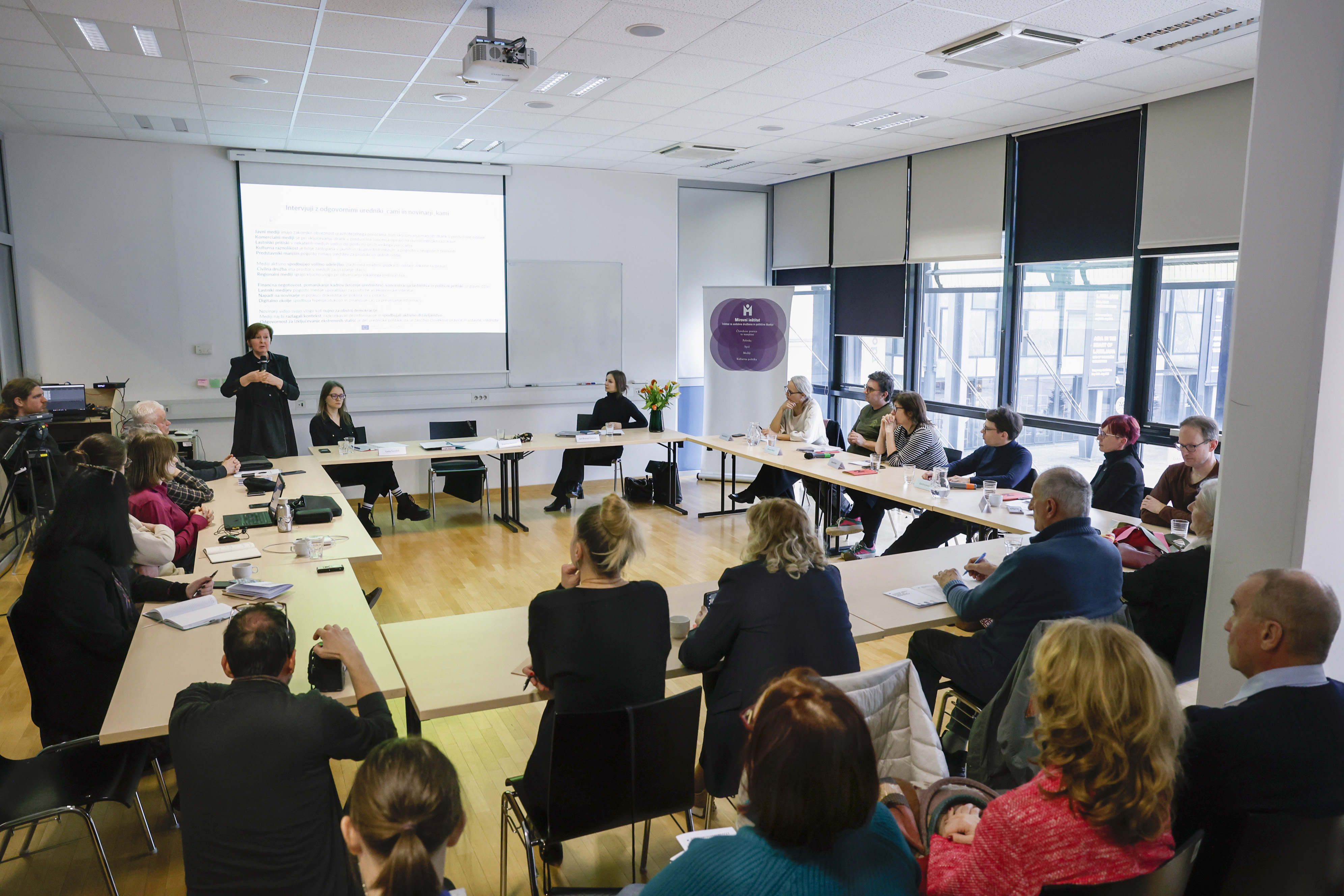
Photo: Borut Krajnc
Most participants agreed that the media are currently in an urgent situation and largely confirmed the project’s research findings in the Slovenian context. Sandra B. Hrvatin summarized the situation by stating: “Recent changes to media legislation in Slovenia have introduced a set of palliative measures for an industry in a terminal phase. In doing so, the ministry has taken on the role of a hospice.” She added that “we do not need reflections on the future, but action in the present.”
Petra Lesjak Tušek warned that an increasing number of journalists are leaving the profession, as journalism itself has become too demanding and exhausting. “I still love the journalistic profession and journalistic work, and I still believe—not everything is hopeless.” She concluded: “Within this hopelessness there is also the word hope. And despite the effort that must be invested, it still seems important to me that we start from the people and go into the field.”
Within the concluding phase of the MeDeMAP project, citizens’ assemblies represent precisely the perspective of the people themselves. The event therefore closed with a contribution by Mirsad Begić, who once again emphasized the value of the formulated demands and highlighted the importance of holding the first citizens’ assembly on media and democracy in Slovenia, as well as the value of informed, constructive, and well-argued public debate.
The full presentation from the roundtable is available in the attachment (in the Slovenian language).
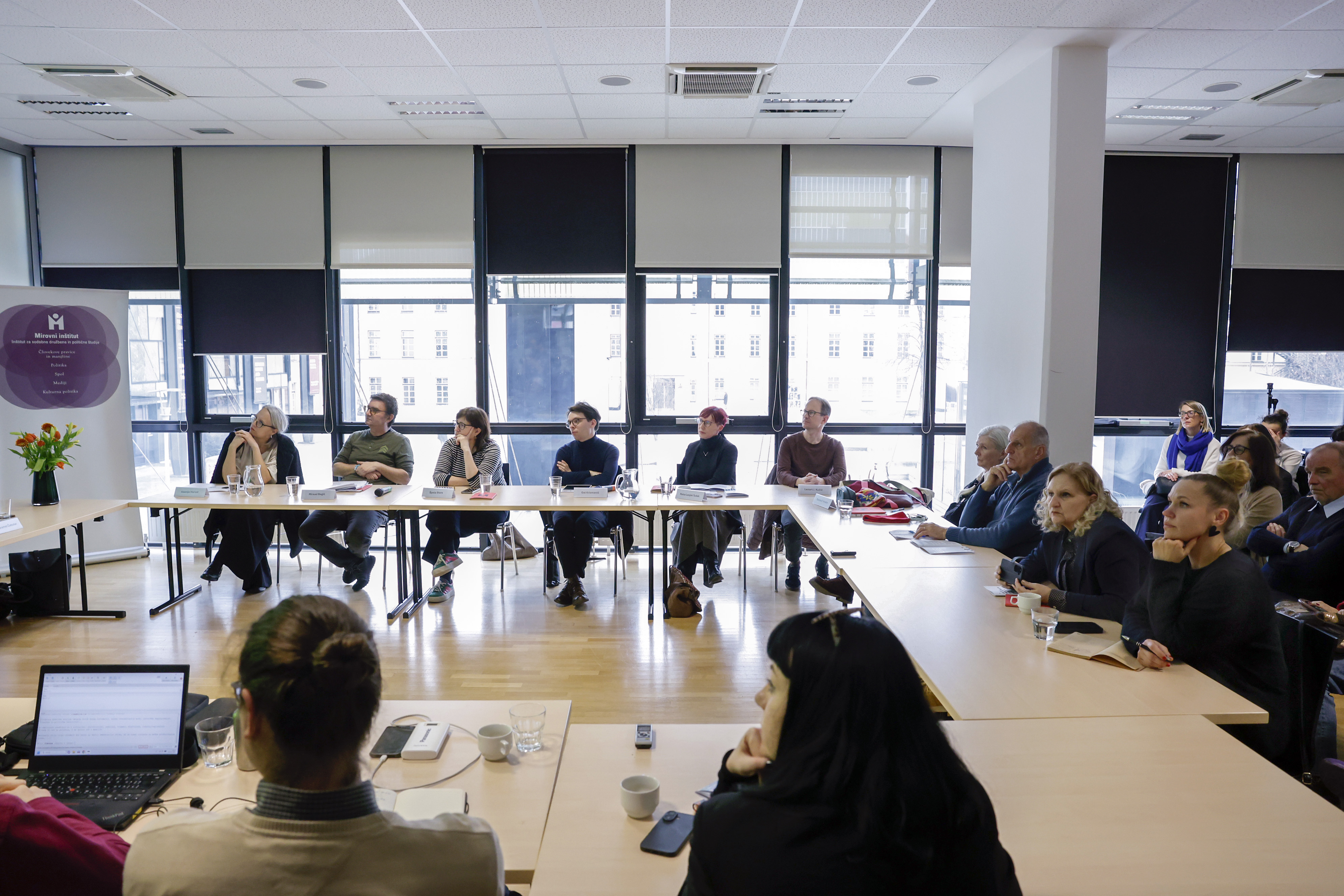
Photo: Borut Krajnc
Related Articles
-
Media Ownership Database Now Openly Available through the Slovenian Social Science Data Archives (ADP)
-
How Do Citizens Understand Media Autonomy and Its Role in Democracy?
-
Invitation to the final MeDeMAP conference and call for papers
-
Peace Institute Annual Report 2024: Focus on human rights, critical thinking, and advocacy