
The mobility of care work between Slovenia and Bosnia and Herzegovina
4. 6. 2026 | Politics
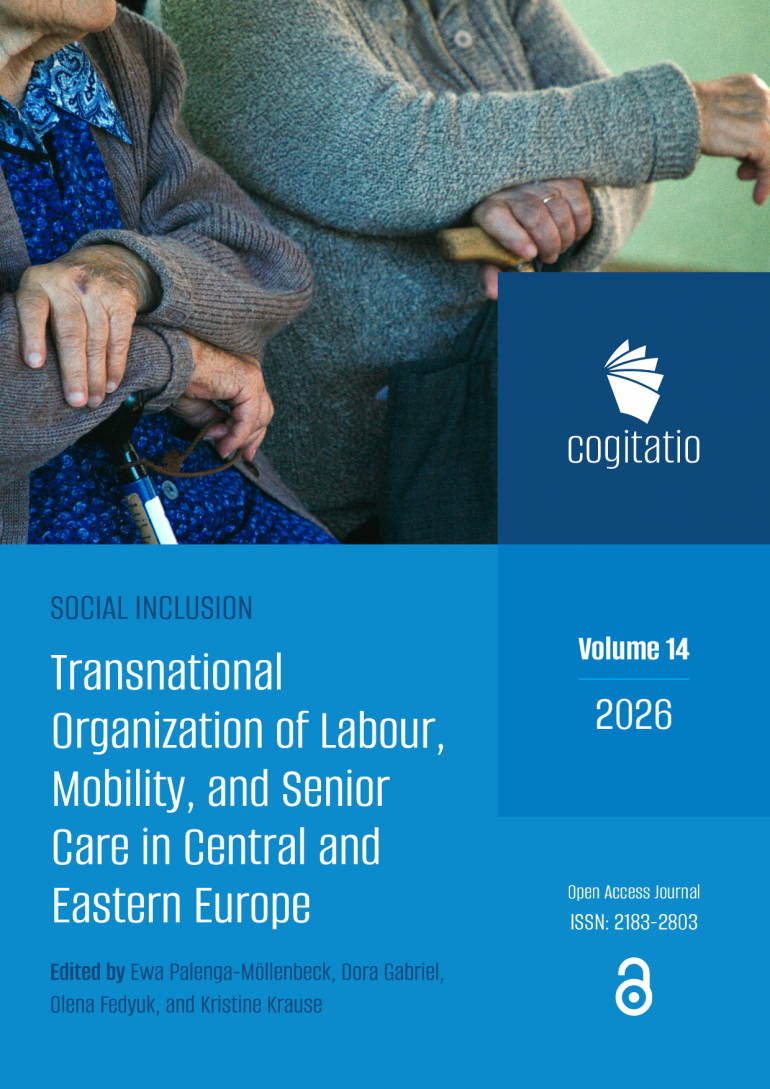
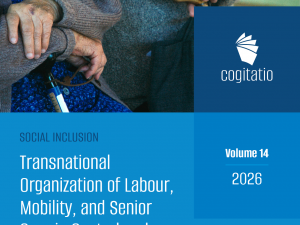
 A new issue of the international journal Social Inclusion has been published, focusing on the transnational connections between labour, mobility, and elder care in Central and Eastern Europe.
The issue also features the article Care Extractivism Beyond Households: Migration and Care for Older People in the Post-Yugoslav Semi-Periphery, which examines the mobility of care work between Slovenia and Bosnia and Herzegovina. In the article, Majda Hrženjak analyses care labour mobility through the lens of care extractivism, a process that emerges at the intersection of migration regimes, labour market segmentation, and welfare state regulation, resulting in the excessive extraction of migrant women’s labour, time, and knowledge.
The article demonstrates how the interaction between the shortage of care workers in Slovenia and the position of Bosnia and Herzegovina—shaped by the Dayton Peace Agreement, a transitional economy, and its status as a so-called “third country”—creates a relational field of labour mobility rooted in the formerly shared Yugoslav space. The analysis reveals that the welfare state actively organises the transnational extraction of care labour through mechanisms such as employer-tied migration regimes, recruitment via family reunification and kinship networks, the devaluation of qualifications, temporal flexibilisation of work, and the transfer of integration costs onto migrants’ social networks.
Related Articles
-
Four Concepts for Understanding Contemporary Labour Relations
-
The web of stigmas: impact of different forms of stigma on occupational risks in sex work
-
Who Cares for Older People? The Transnationalization of Care Work in Central and Eastern Europe
-
On the Digitalisation of European Borders and Migration Struggles